Updates ·
Seamless vs Welded Steel Pipes: Differences, Applications and How to Choose
Seamless vs welded steel pipes: discover the key differences in manufacturing, strength, pressure ratings, applications, and cost. Learn how to choose the right carbon steel or stainless steel pipe for your industrial project.
BY ADMINISTRATOR
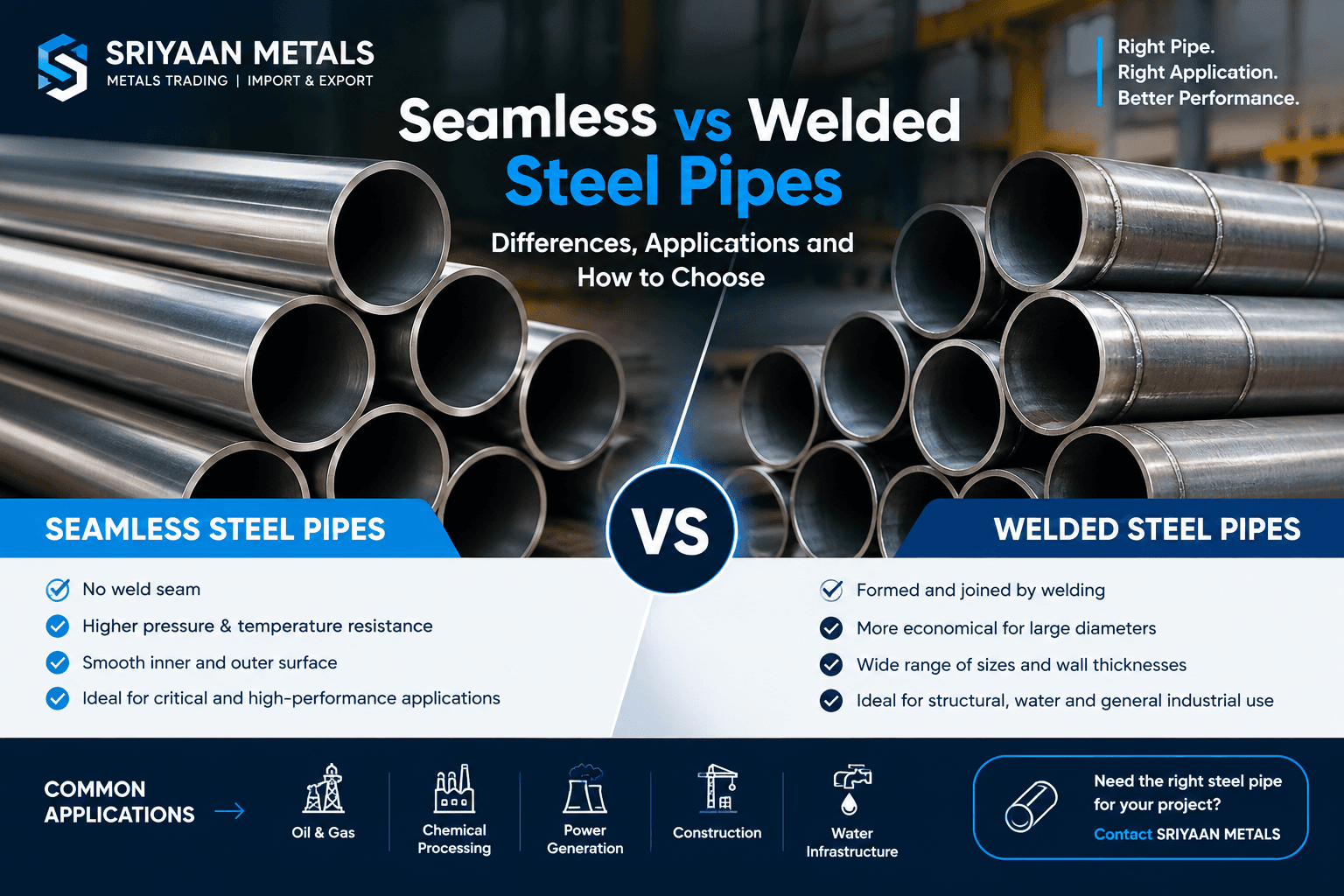
- Manufactured without a longitudinal weld seam.
- Available in different diameters and wall thicknesses.
- Suitable for demanding pressure and temperature conditions when properly specified.
- Used in oil and gas, power generation, petrochemical processing, and mechanical engineering.
- Supplied according to applicable material and manufacturing standards.
- Manufactured by forming and welding steel material.
- Available in a wide range of diameters and wall thicknesses.
- Often economical for large-diameter piping and many general industrial applications.
- Available in carbon steel, stainless steel, and other specified materials.
- Quality depends on manufacturing processes, inspection, testing, and applicable standards.
- Steel grade and mechanical properties.
- Outside diameter and wall thickness.
- Manufacturing quality and dimensional tolerances.
- Weld quality and inspection requirements, where applicable.
- Operating pressure and temperature.
- Corrosion allowance and service environment.
- ASTM A106: Seamless carbon steel pipe for high-temperature service.
- ASTM A53: Carbon steel pipe available in specified seamless and welded types.
- ASTM A312: Seamless and welded austenitic stainless steel pipe.
- API 5L: Line pipe for pipeline transportation systems.
- ASME B36.10M: Dimensions of welded and seamless wrought steel pipe.
- ASME B36.19M: Dimensions of stainless steel pipe.